Tracing Pattern Recognition Methods in European Virtual Table Games Through Historical Adaptations
Devon Vogel · Sep 23, 2026
Tracing Pattern Recognition Methods in European Virtual Table Games Through Historical Adaptations
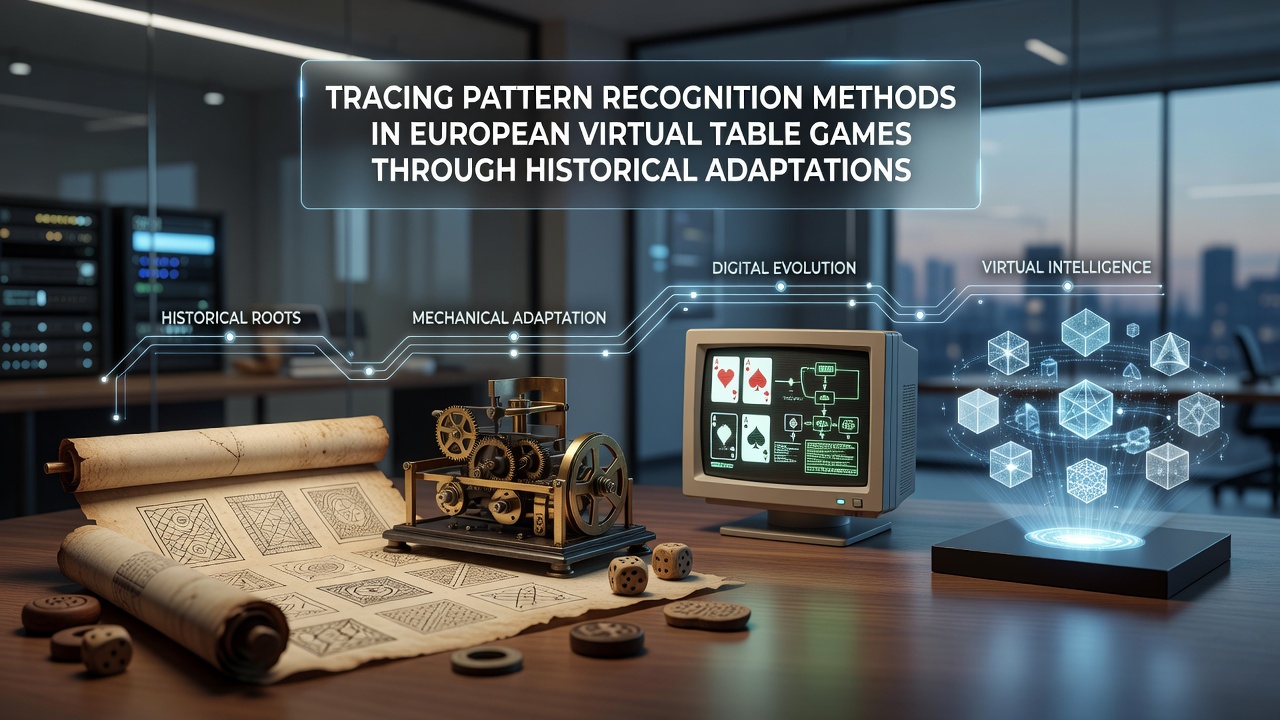
Pattern recognition methods in European virtual table games trace their roots to mid-20th century computing experiments that adapted statistical models from traditional casino floors to digital environments, and researchers have documented how these techniques evolved alongside advances in data processing hardware across the continent. Early adaptations relied on basic frequency analysis applied to roulette outcomes and blackjack hand distributions, while developers in France and Germany integrated mainframe systems to track recurring sequences during the 1970s and 1980s. Those initial frameworks laid groundwork for more sophisticated algorithms that processed player behavior data in real time, and European operators began incorporating elements from probability theory developed at institutions like the University of Cambridge.
Early Computational Foundations in Virtual Table Environments
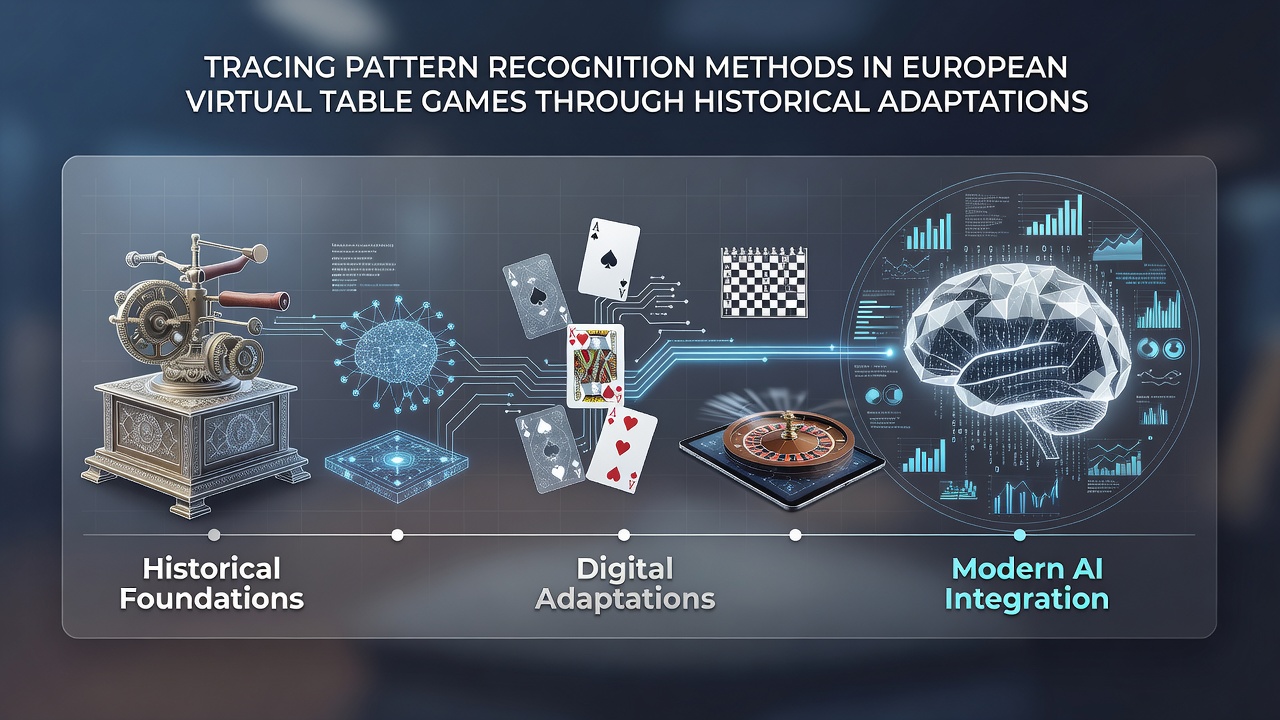
By the 1990s, pattern recognition shifted toward neural network prototypes that identified betting trends in simulated blackjack and poker variants, and studies from academic labs showed how these models reduced computational overhead compared to exhaustive enumeration methods. Virtual table games hosted on early internet platforms adopted Markov chain approaches to predict card depletion patterns, whereas operators in Sweden and the Netherlands refined these systems through iterative testing against live dealer records. Data indicates that by 1998 several platforms had implemented basic clustering techniques to segment player sessions according to risk profiles, and this allowed for dynamic adjustment of virtual shoe compositions without altering core game rules.
Integration of Machine Learning During Platform Expansion
Expansion of online gaming infrastructure in the early 2000s accelerated adoption of support vector machines and decision tree ensembles for detecting sequential dependencies in European roulette and baccarat simulations, while regulatory frameworks in Malta and Gibraltar encouraged transparent documentation of algorithmic logic. Observers note that pattern recognition accuracy improved markedly once datasets grew beyond 10 million recorded hands, and figures from industry reports reveal error rates dropping below 5 percent in controlled benchmarks conducted around 2005. Developers incorporated temporal difference learning to adapt models based on shifting player strategies, and this approach proved effective in multi-player virtual poker environments where collusion patterns required rapid identification.
Regulatory Influences and Cross-Border Data Standards
European Union directives on data protection shaped how pattern recognition systems handled personal information derived from table game sessions, and operators adapted by anonymizing sequence logs before applying clustering algorithms. Research from the European Gaming and Betting Association highlights that compliance requirements prompted development of federated learning techniques which train models across jurisdictions without centralizing raw data, and this method gained traction after 2012 when several national authorities issued updated technical standards. In September 2026 a coordinated review by multiple member states is scheduled to evaluate updated guidelines on algorithmic transparency in virtual gaming, and industry participants anticipate further refinements to pattern detection protocols that align with emerging artificial intelligence regulations.
Contemporary Applications in Live and Hybrid Virtual Formats
Current implementations combine convolutional neural networks with reinforcement learning agents to recognize complex multi-hand patterns in virtual blackjack and poker, whereas earlier rule-based systems handled only linear sequences. Operators in Spain and Italy have deployed these hybrid models to monitor session anomalies that correlate with regulatory thresholds, and performance metrics shared through academic partnerships demonstrate detection speeds measured in milliseconds. External validation from sources such as the Australian Gambling Research Centre has confirmed comparable efficacy rates when similar architectures process European datasets, and this cross-regional benchmarking continues to inform iterative improvements. Pattern recognition now extends to visual cue analysis in live dealer streams, where computer vision identifies card orientation and shuffle irregularities that affect outcome probabilities.
Future Trajectories and Technical Refinements
Ongoing research explores transformer-based architectures capable of processing extended game histories within single forward passes, and early prototypes suggest reduced latency for real-time interventions. European developers continue to refine differential privacy mechanisms that preserve statistical utility while limiting individual traceability, and these adaptations respond directly to evolving data governance expectations. Observers note that integration with quantum-inspired optimization routines may further enhance pattern detection in high-dimensional feature spaces generated by multi-table tournaments, and preliminary simulations conducted in university labs indicate measurable gains in recall rates for rare event sequences.
Conclusion
Historical adaptations of pattern recognition methods have progressed from simple frequency counts to advanced machine learning frameworks that underpin modern European virtual table games, and the trajectory reflects both technological capability and regulatory context. Continued refinement through cross-border collaboration and academic validation supports sustained development of these analytical tools, while scheduled policy reviews in September 2026 will likely influence subsequent implementation standards across the sector.